Complete course · 7 modules
Chip Interfaces 1: Talking Between Chips
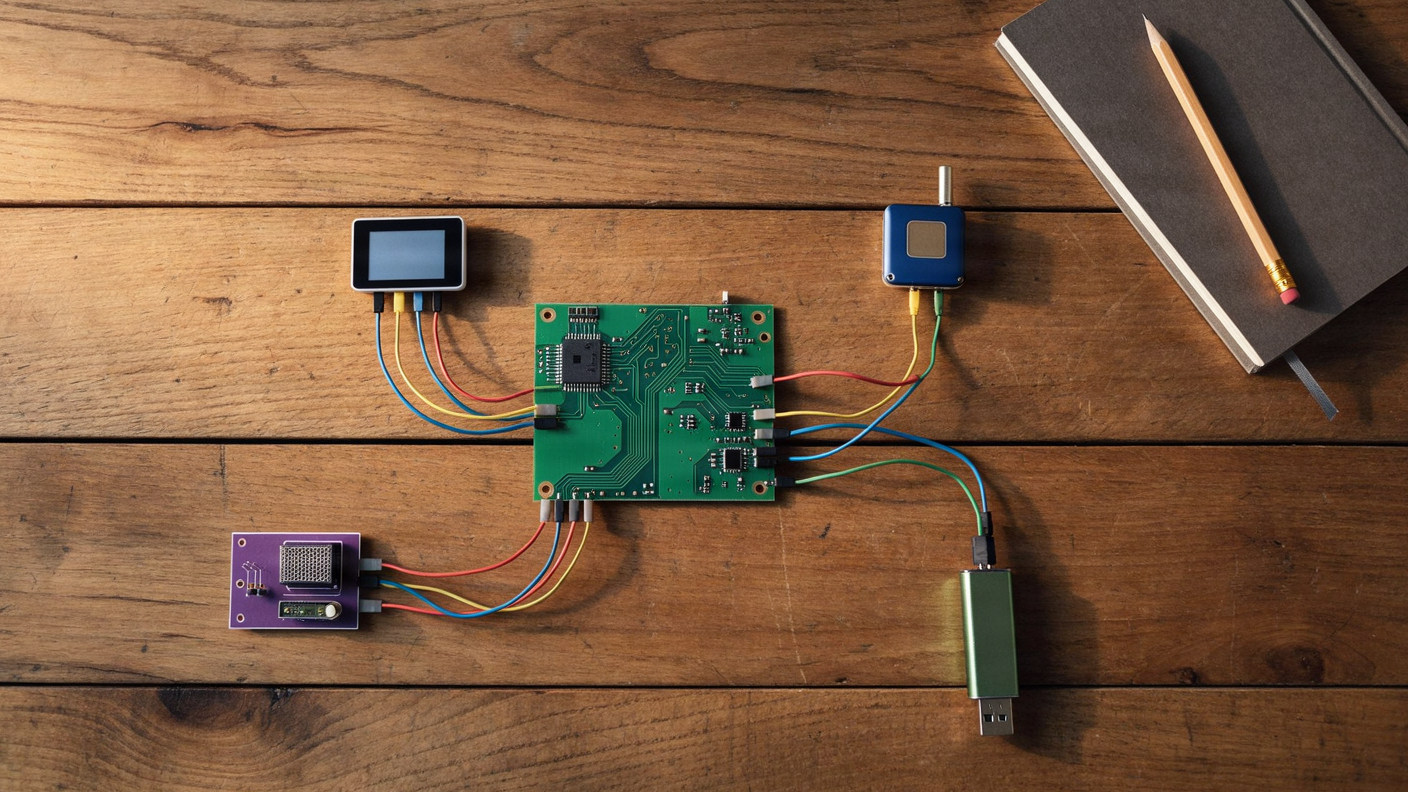
From pins to bytes. Part one of two. You design the chip inside a small data logger and give it a way to talk to the world, one link at a time: a UART that prints to a laptop and hears a GPS module, valid/ready handshakes and FIFOs that carry the bytes inside, SPI to a flash chip, and I2C, from the open-drain wire up to reading a real temperature sensor from its datasheet, on two wires a clock chip and a screen can share. Every idea starts from a real problem, and every module ends with your own blocks assembled into a working link, checked by a testbench you learn to read and write. It needs Digital Design Fundamentals and teaches the testbench skills it uses. It teaches Verilog on Icarus in your browser; it does not cover VHDL, vendor tools or timing closure, and it does not promise a job. Part two, Chip Interfaces 2: Talking Inside a Chip, builds what sits behind the pins.
Create a free account to open the lessons and keep your progress.
Start with the electrical meaning of a bit. Finish by seeing how your RTL becomes silicon.
- Modules
- 7
- Lessons
- 53
- Free lessons
- 0
- Account needed
- 53
Course modules
0/7 freeModule 00
Why chips talk
You have finished Digital Design Fundamentals: you can write a counter and a small state machine. No testbench experience is needed: this module teaches the bench basics the rest of the course uses.
Free account4 lessonsLocked
Module 00
Why chips talk
You have finished Digital Design Fundamentals: you can write a counter and a small state machine. No testbench experience is needed: this module teaches the bench basics the rest of the course uses.
Lessons
- 01A chip that needs to talk